Showing posts sorted by relevance for query speedy gonzales. Sort by date Show all posts

Friday, February 21, 2014

Pat Boone, Trini Lopez, Speedy Gonzales, and a Great Hit from the Sixties

original posting, April 5, 2007--updated February 21, 2014


Raul, an SDSU Latin American Studies graduate student in my e725 Ethnic Lit and Film seminar, enters the Galleryblog with a quick post/complement for Tex[t]-Mex's chapter on Speedy Gonzales:
To: memo@sdsu.edu Subject: Speedy Date: Thu, 15 Feb 2007 02:07:44 -0500 X-MB-Message-Source: WebUI From: Raul I think this would be great for the tex[t]-mex blog and maybe the second edition of the book if can include it: "In 1959 and 1960 Pat Boone continued to sell many records, although his production of top ten songs slowed down a bit. Some of his songs during this period included With The Wind And The Rain In Your Hair and Twixt Twelve and Twenty. In 1961 he came back with Moody River, which was to be his fifth and final number one song. His final top forty song was a novelty record, Speedy Gonzalez in 1962. The female backing voice on this song was Robin Ward, and it peaked at number six."
The lyrics speak for themselves! ack!  Have a listen if you can stomach it!   

...and Here's some backstory on the song.

The Lyrics...

Speedy Gonzales
Mancini/Nicola
It was a moonlit night in old Mexico.
I walked alone between some old adobe haciendas.
Suddenly, I heard the plaintive cry of a young Mexican girl.

You better come home, Speedy Gonzales
Away from tannery row
Stop all a your a-drinkin'
With that floozy named Flo
Come on home to your adobe
And slap some mud on the wall
The roof is leakin' like a strainer
There's loads a roaches in the hall

Speedy Gonzales, why don't cha come home?
Speedy Gonzales, how come ya leave me all alone?

"Hey, Rosita - I hafta go shopping downtown for my mother
She needs some tortillas and chili peppers."

Your doggy's gonna have a puppy
And we're runnin' outta Coke
No enchiladas in the icebox
And the television's broke
I saw some lipstick on your sweatshirt
I smelled some perfume in your ear
Well if you're gonna keep on messin'
Don't bring your business back a-here

Mmm, Speedy Gonzales, why don't cha come home?
Speedy Gonzales, how come ya leave me all alone?

"Hey, Rosita - come quick
Down at the cantina they giving green stamps with tequila!!"

Writer/s: MANCINI, HENRY NICOLA
Universal Music Publishing Group, Warner/Chappell Music, Inc., Sony/ATV Music Publishing LLC, EMI Music Publishing


{source}


Sunday, August 09, 2020

Virgil Ross Animation Style Sheet: Warner Brothers's Speedy Gonzales!


The auction price for this priceless Speedy Gonzalez artifact got too rich for my blood--I think as of now, Sunday morning August 9, 2020, the price is around $150.00.

Still, a piece of American history--in particular, an American history focused on the production of ethnic American archetypes and stereotypes. And, a piece of the backstory of how 20th century animated masterpieces were forged.

More on the image from Heritage Auctions below and a reminder that I (literally) wrote the book on Speedy Gonzales--the key central chapter of Tex[t]-Mex: Seductive Hallucination of the "Mexican" in America is focused on "the fastest mouse in all Mexico." Check it out here: https://amzn.to/2DrIouU

From Heritage Auctions page, https://comics.ha.com/itm/animation-art/production-drawing/virgil-ross-speedy-gonzales-model-sheet-drawing-original-art-warner-brothers-c-1990s-/a/122032-13740.s

Virgil Ross - Speedy Gonzales "Model Sheet" Drawing Original Art (Warner Brothers, c. 1990s).
He's "the fastest mouse in all Mexico" -- Speedy Gonzales!
 

"He was developed by Friz Freleng and animator Hawley Pratt; his official debut short, Speedy Gonzales (1955), was an Academy Award winner. One of the animators on that historic short was Virgil Ross, who drew this wonderful 16 field model sheet-style illustration with seven full-figure images of Speedy. Virgil Ross (1907-1996) was a long-time Warner Brothers animator who worked in the Bob Clampett, Tex Avery, and Friz Freleng Units. He was famous for his action and dance sequences, as well as his facial expressions. Mr. Ross began releasing hand-painted Limited Edition cels of progressions of his famous Looney Tunes scenes as part of the "Masters Collection" for the Warner Brothers Studio Stores and animation galleries. He began making personal appearances where he created one-of-a-kind drawings of the Looney Tunes characters as well as other cartoons he worked on for other studios. He received the prestigious Winsor McCay Award in 1988. Image sizes on this signed illustration range from 4.5" to 5.5". Fine condition."

Saturday, May 17, 2014

Friz Freleng, Warner Bros., Speedy Gonzales, Slowpoke Rodriguez and "Mexican Boarders" (1962)

updated 03/07/16     updated 02/28/14     updated: 9/30/14     reposting: 9/15/09     original posting 3/31/07 


It is May or June 1962, and as I frolic in my crib, 6 months old, at my house on Hendricks Avenue, things are happening at The Tivoli Theatre (opposite) in downtown Laredo. There, screening for the first time, is the latest animated short feature out of the genius hands of a crazy cohort of driven, twisted imagineers at Warner Bros. studios.

"Mexican Boarders," directed by Friz Freleng, with Hawley Pratt, and written by John Dunn, tells the story of a visit to Speedy Gonzales by his cousin, Slowpoke Rodriguez.

I am writing about it here on the Tex[t]-Mex Galleryblog as it throws a wrench (perhaps heaves an ACME bomb is better, it is Warner Brothers cartoons I'm writing about) at a key chapter of my University of Texas book, chapter 3, which has the unfortunate distinction of sporting the longest title I've ever published: "Chapter Three. Autopsy of a Rat: Sundry Parables of Warner Brothers Studios, Jewish American Animators, Speedy Gonzales, Freddy López, and Other Chicano/Latino Marionettes Prancing about Our First World Visual Emporium; Parable Cameos by Jacques Derrida; and, a Dirty Joke."


What's remarkable about "Mexican Boarders" is the mise en scène, that old war-horse French term from film criticism that speaks to the setting, background and tableau, if not the "actors" themselves. For in this 1962 classic, Speedy Gonzales is living the highlife in an upper-class Mexican town, "in the fine [bourgeois] hacienda of José Álvaro Meléndez." Most other Speedy shorts from the 60s feature Speedy and his cohorts living in trash ("Cannery Woe," 1961) or falling out of cantinas ("Tabasco Road," 1957)--and the bulk of my argument on Speedy, Autopsy of a Rat, keys on this. "Mexican Boarders" is different. Here, as you can see to your left, Speedy lives the life of a Patrón, in his "Casa de Gonzales." This Speedy is what we call in Laredo, Texas in our licentious and salacious patois, a high sosiégate, which literally means high calm-down, and figuratively means "high get-over-your-own-damn-self" and sounds like "high society."

So this bourgie ratón lives the good life, stealing cheese and such from Sylvester, who is so run down in "Mexican Boarders," that he has to resort to amphetamines to get him through his days.

That's when the key plot twist in this fable occurs and Speedy's country mouse cousin Slowpoke Rodriguez arrives to visit--he is slow-talking, more heavily accented than Speedy (his voice provided not by Mel Blanc, Warner's heralded man of a thousand voices, but by Tom Holland). All the sight gags revolve around Speedy saving his slow, country bumpkin cousin, from Sylvester owing to said bumpkin's obsessive compulsive drive for more food--"Ahhmm, steeeeel hawwwwwwwngreeee" becomes his Godot-like mantra. One particularly cool sight gag fuses the cubist sensibility of Georges Braque and Pablo Picasso.


But what is most striking about "Mexican Boarders" is the intellectual capacity of Slowpoke Rodriguez. Freleng et al capitalize on his largely American audiences expectations not only of a "Mexican," but of a rustic "peon" from the country--an urban/agricultural antagonism that transcends even nationalistic biases. For this slow-talking, slow-moving mouse is nobody's fool. Let him speak for himself: "maybe Slowpoke is pretty slow downstairs in the feet, but he is pretty fast upstairs in the cabeza.” Stopped by Speedy from emerging one evening to feed his ever-present appetite, Slowpoke demures for a second, only to confess resignedly to his perplexed cousin, "it's a far, far, better thing I do than if I starve."

Striking. Freleng ventriloquizes his animated Mexican as a Sydney Cartonesque, Dickens-alluding literati; moreover, in the next scene, Rodriguez emerges as a Svengali-like mesmerist (no, I am not exaggerating!) who converts Sylvester into a fan-bearing lackey.


This ironic and surreptitious re-figuration of the "Mexican" as cunning, mesmerizing subject--not to mention the Machiavellian potentiality embedded in this animated marionette will have to be documented in the second edition of Tex[t]-Mex.


Here's a streaming version of Mexican Boarders via DailyMotion:

09 - Mexican Boarders by ALEXAGORDON28771 

 Here are some recent images I dredged up on a google image search:

A Warner Brothers' animation character style sheet from 1992
source
A next-generation 3-d version of Slowpoke:

source


Sunday, December 16, 2012

In the Trash with Speedy Gonzales {reposting from November 2007}

Original Posting, November 22, 2007

"Mexicans" Out of the Trash or The Tamayo Tres Personajes Caper

A fair part of my work on the figuration of "Mexicans" in American mass culture finds me pondering the domain of sanitation workers, mobster hitmen, the poor and homeless, and rats (ersatz "Mexican" mouse Speedy Gonzales included): the trash.

For whatever reason, American artists, illustrators, writers, and their ilk spend a fair amount of time picturing Mexicans living in trash--scenes likes these fill the mise-en-scène of Speedy Gonzales cartoons and even late 20th century "masterpieces" like Pixar and John Lasseter's A Bug's Life where Mexicanicity and detritus, and, not incidentally, criminality and lasciviousness, go hand in hand in hand with a transparency befitting Cold-War era propaganda. This scene here, featuring Kevin Spacey's vocal talents as "Hopper," is the most crucial and provocative in the film, as it all unfolds in a straw-woven sombrero remade via CGI into a standard Hollywood cantina.


So it is that the recent tale of Rufino Tamayo and his stolen painting Tres personajes (scroll down) brought a tear to my eye and a smile to my face.


Yes, here again a tale is told of Mexicans in the trash, but here at least the tables have been turned and high art by genius Mexican hands is being saved from the indignities of the dustbin. The New York Post, of all rags, has the best rendition of this curious moment in art history.

A page from the original "Autopsy of a Rat" article from Camera Obscura appears here opposite to your left; a revised version of it appears as Chapter 3 of Tex[t]-Mex: Seductive Hallucination of the "Mexican" in America available from Amazon.com, Powells.com, and a host of other cyber hawkers of ink and paper.


Update

The original version of "Autopsy of a Rat"--a peculiar critical retrospective on animated and animatronic "Mexicans" that chaotically marries the fields of ethnic studies and cultural studies--is now available again through the magic of pdf documents. Hit Speedy with your mouse to have a taste!

I was particularly proud of this article when it appeared in 1996 as it was, at the time, the longest thing I had ever written (over 50 pages with footnotes*) AND the amazing editors (gracias gracias again to Sharon Willis!) at Camera Obscura commissioned me to design the cover of that issue, featuring a digital collage by Guillermo Nericcio García entitled, "Mexicanesque Maus or Autopsy of a ©Rat."

The most bizarre thing about the Speedy piece is that it began its life as a short segment of a longer essay on Pee-wee Herman, transvestism, Medical Center, and more--this essay did not see the light of day till the Iowa Journal of Cultural Studies threw me the proverbial bone and published it in 2004--while the printed edition of the journal had tiny images, the online version features pretty good color and black & white reproductions of key materials. There, wistfully looking out the window to your right, is Robert Reed, the pater familias of the Brady Bunch clan (left) reborn as Pat "Patricia" Gaddison, transsexual, from the memorable episode of Medical Center** that foregrounds my Pee-wee meditation on celebrity masturbation.

*Nericcio, William Anthony. "Autopsy of a Rat: Odd, Sundry Parables of Freddy Lopez, Speedy Gonzales, and Other Chicano/Latino Marionettes Prancing About Our First World Visual Emporium." Camera Obscura: Feminism, Culture, and Media Studies (January 1996), 37:193, 230n15.

** “ The Fourth Sex.” Medical Center. Dir. Vincent Sherman. By Rita Larkin. Perf. Robert Reed. CBS. 15 Sept. 1975.

Wednesday, June 04, 2008

The Birth and "Autopsy" of Speedy Gonzales!

Update

The original version of "Autopsy of a Rat"--a peculiar critical retrospective on animated and animatronic "Mexicans" that chaotically marries the fields of ethnic studies and cultural studies--is now available again through the magic of pdf documents. Hit Speedy with your mouse to have a taste!


I was particularly proud of this article when it appeared in 1996 as it was, at the time, the longest thing I had ever written (over 50 pages with footnotes*) AND the amazing editors (gracias gracias again to Sharon Willis!) at Camera Obscura commissioned me to design the cover of that issue, featuring a digital collage by Guillermo Nericcio García entitled, "Mexicanesque Maus or Autopsy of a ©Rat."

The most bizarre thing about the Speedy piece is that it began its life as a short segment of a longer essay on Pee-wee Herman, transvestism, Medical Center, and more--this essay did not see the light of day till the Iowa Journal of Cultural Studies threw me the proverbial bone and published it in 2004--while the printed edition of the journal had tiny images, the online version features pretty good color and black & white reproductions of key materials. There, wistfully looking out the window to your right, is Robert Reed, the pater familias of the Brady Bunch clan (left) reborn as Pat "Patricia" Gaddison, transsexual, from the memorable episode of Medical Center** that foregrounds my Pee-wee meditation on celebrity masturbation.

*Nericcio, William Anthony. "Autopsy of a Rat: Odd, Sundry Parables of Freddy Lopez, Speedy Gonzales, and Other Chicano/Latino Marionettes Prancing About Our First World Visual Emporium." Camera Obscura: Feminism, Culture, and Media Studies (January 1996), 37:193, 230n15.

** “ The Fourth Sex.” Medical Center. Dir. Vincent Sherman. By Rita Larkin. Perf. Robert Reed. CBS. 15 Sept. 1975.


Original Posting, November 22, 2007 | "Mexicans" Out of the Trash or The Tamayo Tres Personajes Caper

A fair part of my work on the figuration of "Mexicans" in American mass culture finds me pondering the domain of sanitation workers, mobster hitmen, the poor and homeless, and rats (ersatz "Mexican" mouse Speedy Gonzales included): the trash.

For whatever reason, American artists, illustrators, writers, and their ilk spend a fair amount of time picturing Mexicans living in trash--scenes likes these fill the mise-en-scène of Speedy Gonzales cartoons and even late 20th century "masterpieces" like Pixar and John Lasseter's A Bug's Life where Mexicanicity and detritus, and, not incidentally, criminality and lasciviousness, go hand in hand in hand with a transparency befitting Cold-War era propaganda. This scene here, featuring Kevin Spacey's vocal talents as "Hopper," is the most crucial and provocative in the film, as it all unfolds in a straw-woven sombrero remade via CGI into a standard Hollywood cantina.


So it is that the recent tale of Rufino Tamayo and his stolen painting Tres personajes (scroll down) brought a tear to my eye and a smile to my face.


Yes, here again a tale is told of Mexicans in the trash, but here at least the tables have been turned and high art by genius Mexican hands is being saved from the indignities of the dustbin. The New York Post, of all rags, has the best rendition of this curious moment in art history.

A page from the original "Autopsy of a Rat" article from Camera Obscura appears here opposite to your left; a revised version of it appears as Chapter 3 of Tex[t]-Mex: Seductive Hallucination of the "Mexican" in America available from Amazon.com, Powells.com, and a host of other cyber hawkers of ink and paper.

Thursday, September 24, 2009

Speedy Gonzales versus the Roadrunner

If you have been here before, you know all about my Speedy obsession; if not, bring yourself up to speed here or throw down some moolah for Tex[t]-Mex. At the 7:05 mark, Speedy Gonzales vs. the Roadrunner in "The Wild Chase"(1965)--not very good but if you are hard up for a Speedy short, here it is!

Thursday, January 03, 2008

Speedy Gonzales, Director, I. "Isadore" Freleng (1955)

A key animated short, "Speedy Gonzales," from 1955, directed by Isadore Freleng, credited as I. Freleng so as to cloak his Jewish name from Southern US film distributors (you can't make this up), is now available online on YouTube. The Speedy Gonzales chapter, "Autopsy of a Rat," plays a key part in Tex[t]-Mex: Seductive Hallucination of the "Mexican" in America from UT Press.

Tuesday, September 02, 2008

Speedy Ghost to Town: A Speedy Gonzales Cartoon from 1967

As I hint at in Tex[t]-Mex, Speedy Gonzales animated features had de-volved in the late 1960s into poorly animated, half-ass scripted balls of nonsense; many of these later animated shorts feature Daffy Duck, of all characters, as Speedy's foil.

It turns out these sub-neanderthal "classics" are all the rage in China of all places--where I found a link to "Speedy Ghost to Town" and many others. Hit the image below to access the streaming video.

Tuesday, September 13, 2011

Speedy Gonzales Recast as a Zapatista!

original posting 6/6/09 | updated/fixed links 09/13/11

source

The bread-and-butter of Tex[t]-Mex is the anchor-chapter on the hijinks of one Speedy Gonzales.  From time to time, I do image searches for Speedy and often run across the one above of Speedy recast as a Zapatista!

You can see/read my back-story on Speedy and Warner Brothers animation wizards here or (updated with more pictures) here.

Tuesday, October 16, 2007

Swarthy Speedy Gonzales Shilling Enchiladas

It was the early 1990s and unbeknownst to me, travailing in an Eastern Connecticut land grant university, Tyson Foods came out with a line of Looney Tunes tv-dinners. One of these, touting enchiladas, featured the loving mug of our good friend Speedy Gonzales. You can read about it here--a high-res image of the box is also available here on your right.

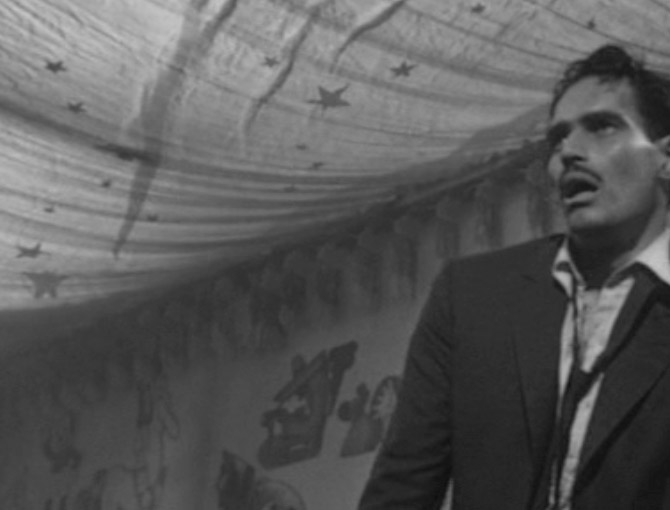
What's most curious about this box is just how dark and brown Speedy becomes in this incarnation of his corporate-America-forged "Mexican" being. Something about hawking sub-edible frozen culinary delights moved the hand of his marketers to give Speedy something akin to the brown-face applied to Charlton Heston in Orson Welles's' Touch of Evil. Commonly, he does not appear this way--especially not in his heydays during the 1960s. Just more to worry about as we attempt to parse the evolution of stereotypes in the good ol' USA.

Tuesday, January 11, 2011

Speedy Gonzales! Poster Child for Virgin Broadband in the UK


A big tip of the sombrero to Marisa Smith, our UK correspondent who sends word that Speedy Gonzales is the icon for fast, sexy broadband internet deliciousness from Virgin! Hit the image above to see Speedy as a Virgin photomodel--hit below for more on the campaign and, below that, the premiere commercial for the series...


Sunday, February 01, 2009

Speedy Gonzales Bank


If you are not a regular reader of the Tex[t]-Mex Galleryblog, you may be clueless about my fascination with the lived history of the fastest mouse in all Mexico, Speedy Gonzales! The eBay sighting glossed in the picture above makes me tremble with desire but I must put my object acquisition fetish to rest awhile till I get bigger digs for all my "Mexican" paraphernalia! However, if anyone wants to know what I want for Christmas, follow this link (it should stay live till around February) and break out with the early Santa cheer.

Following up on my profound Speedy fetish, and, as a Sunday treat, here's Pancho's Hideaway, from 1964--one of DePatie-Freleng's first "features" in association with Warner Brothers. It's not a bad cartoon as cartoon goes, though the cheapo limited animation is a real let-down once you've been raised on golden era of WB animated shorts from the 40s and 50s. Warners had closed their own animation shop and DePatie-Freleng stepped in to outsource it for the WB. The best part of the 'Hideaway is seeing Yosemite Sam as cross-dressed as "Mexican" Pancho Vanilla ("Pancho Villa"), replete with Mel Blanc's Mexicanizing-up of Sam's famous drawl. As stereotype-festering vehicle of Tex[t]-Mextian malfeasance, this short feature is rather tame on the horrendous scale of anti-Mexican loathing and worth a pre-Super Bowl peek or two.

Saturday, November 24, 2007

The Official Party Line on Speedy Gonzales!


Far be it for this cartoon-loving academic to eschew official sources of information on the fastest mouse in all Mexico and best-known Mexican stereotype in American mass culture! So it is that I point you to Warner Bros. official, online site for Speedy Gonzales. The archival research here is decent, even heralding the contributions of one Hawley Pratt (he of Texas Toads infamy) in the revision of Speedy's character from the "rattier," swarthy, be-goldtoothéd, "mean[ ]" mouse he was to the Veracruz-be-toggéd imp/Lothario we know and love! I must have been asleep in the library the days I did research to miss out on Pratt's hand in morphing this very special "Mexican" rat.


Speaking of research, Warner Brothers publicity people out themselves as average undergraduates when it comes to hitting the archives--most of their "official" site is cribbed from Wikipedia! Lookout Britannica, your days are numbered!

To complete the Borges-touched essence of this circular ruin, I have added a Tex[t]-Mex Galleryblog link to the Wikipedia site.

Arriba! Arriba! Andale! Andale!


Wednesday, June 09, 2010

Speedy Gonzales in Illinois! A Sighting...

Regular correspondent David Diego Rodríguez send in some Speedy Gonzales-laced snapshots from his vacation! David writes:

From: David Diego Rodriguez
Subject: Speedy Gonzalez
To: Bill Nericcio

Hi Bill,

Yesterday I was at Six Flags Great America in Gurnee, Illinois. I thought you might be interested in these signs I saw there.
and, I was! here they are! click them to make them grow....

Thursday, March 08, 2007

Jean Baudrillard, 1929-2007

Key sections of Tex[t]-Mex owe their debt, if not their birth, to the writings of French post-structuralist guru Jean Baudrillard who died this week in Paris--a BBC obituary is here and a GuardianUK online piece appears here--kudos to my colleague Joanna Brooks for the headsup and the lowdown. Best known for his writings on the simulacra and the processes of simulation, Baudrillard was the go-to theorist to cite when I was trudging up Buffalo Street hill in Ithaca at Cornell in the mid-80s--if the Cars and the Talking Heads were the music of that moment, then it was Baudrillard spinning the LPs of theory at that time. With Derrida, Irigaray, Kristeva, Foucault, Barthes and Lacan, he was part of the theoretical French wave that infected a whole generation of humanities professors in the United States--that post-structuralist influenza was as heady as absinthe. Here's a selection from my book's introduction wherein I signal my debt to Jean--rest in peace.

What obsesses me, what urges me to bring these words to your eyes, is the network of signs in the U.S. mass media that do yeoman's service representing the various peoples, cultures, institutions, and corporations usually totalized, homogenized, and smelted under the classification "Mexican" or "Latina/o."

But these signs (as semioticians, poststructuralists, and others within the cultural-studies mall have taught us) are not representations of anything approaching reality.

Reality is a Utopia, a dreamy conceptual substance favored by politicians, demagogues, and aesthetic-overdosed humanists. In analyses of Mexicans as well as "Mexicans," we are trafficking as much with mass culture as masked culture—here please call to mind speculations on Mexican subjectivity from the once-lucid Octavio Paz in his Labyrinth of Solitude.

So I want to guarantee that we will not spend the time we have here together trying to take off this mask, to resuscitate the essential figure of some "real Mexican." If that were possible, we could just change the channel or turn off the television every time someone like Freddy López or Speedy Gonzales (or "Manuel" from the BBC's Fawlty Towers) appears and, by doing so, halt the dissemination of these extraordinary ethnic tropes.

"Real Mexicans"? "True Latinas/os"?


We ought not to linger in that snake pit. And we have 1980s Euro-wunderkind Jean Baudrillard, among others, to thank for graciously saving us some ink. Baudrillard's critical "spankings" rate a second glance, especially those moments in "The Precession of Simulacra" where he surmises that "it is always the aim of ideological analysis to restore the objective process."

Good enough. Most of us want little more than to even the score, set things right, heal the rift, "restore" objectivity, and so on. But this will not do.

The germ of this book was a vendetta I had for an animated Mexican mouse by the name of Speedy Gonzales; but, in the end, I had to let the anger go. Baudrillard, holding forth again, says: "It is always a false problem to want to restore the truth beneath the simulacrum." Look behind Speedy or beneath Freddy López and one will not find Mexican-hating illustrators or Latino-loathing puppeteers (ok, maybe one or two; we are talking about animated "Mexicans" created in California). More often than not, one will find someone working sine dolo malo, "without fault, without an intent of evil," as the Romans used to say. But not always without fault—the autopsy of a rat that appears within the pages of this book features enough innocent villains and guilty angels to populate a Hollywood B film.


And, to be frank, it is not just "Africans" (screen "Fresh Hare" here) or "Mexicans" that come off badly when it comes to mechanical reproduction of ethnic types—check out these cute gringo kids from my private collection of "ethnic" types (in particular, look closely at the boy on the right, who has been digitally processed so much that his "skin" takes on the texture of a Pixar-born(e) computer-generated-image offspring of a CGI wet dream by the in vitro-cloned hybrid child of Mengele, Geppetto, and John Lasseter).


So, I promise: we will not labor to discover the true "Mexican," nor will we seek to restore the essential and true Latina/o phenotype and rescue "our" representation from the clutches of a manipulative mass media; rather, I want to try something much more modest and not at all perfectly organized—my one genuflection to the niceties of organization was to order my chapters somewhat chronologically in the order that they were conceived. This may lead to some grumbling from the peanut gallery regarding the Lupe Vélez's entrance in the later galleries of this labyrinth of horrors, when chronology and history would place her first—but doing so would upset the gods that have ordained this critical effort, and it is to them I must pay obeisance even before the needs of you, my gentle, indulging reader.

Saturday, January 27, 2007

The Second Coming of Speedy Gonzales


Welcome Galleryblog readers to our new experimental home at blogger.com!

Tex[t]-Mex: Seductive Hallucination of the "Mexican" in America has a huge chapter that aspires to be nothing more and nothing less than the final word on the "fastest mouse in all Mexico." Unfortunately, the book's chapter is already badly dated as it omits any reference to this new series of Speedy Gonzales ads targeting "Hispanic" audiences. Here reproduced, all of the three new ads:

There's more on the Speedy/VW campaign here in a March 2006 posting.

Tuesday, July 31, 2007

Speedy Gonzales, Gonzales Tamales, Marijuana, and the Acme of "Mexican" Stereotypes

Friz Freleng is a genius and one of the aims of Tex[t]-Mex is to do justice to his vision--not for nothing does chapter three engage in a detailed analysis of Freleng and Jacques Derrida's unpredictable similarities. No, I am not joking! Freleng and Derrida! Freleng's position in the Hall of Fame of American Cultural Artifacts is secure, as is his place in the rogue's gallery of magnificant stereotype imagineers.

Recent forays on the net led me to a decent "print" of Freleng's Gonzales, Tamales from 1957. It is a curious animated short wherein Speedy is betrayed by his comrade mice for stealing "all the ladies." Listen late in the piece for Speedy's sung marijuana bit:


Freleng's colleagues at Warner Brothers include another genius, genius-crafter of stereotypes, by the name of Bob Clampett. His "masterpiece," Coal Black and de Sebben Dwarfs, is also available via youtube here:

Saturday, February 23, 2008

Dave Malcolm, SDSU Prof Extraordinaire, RIP

My essay, "Autopsy of a Rat," the Camera Obscura (37) Speedy Gonzales exposé that went on to become the central chapter of Tex[t]-Mex would not be what it is without an unforseen assist from an SDSU College of Education giant--a professor and a friend by the name of Dr. Dave Malcolm. Professor Malcolm was directly responsible for revealing the research that led to my unearthing and "carbon-dating" of the untoward and salacious birth of the name "Speedy Gonzales" in Hollywood and California. RIP my friend, RIP.

Get your hands on one of my books ...