Lima's meditation on "Personal Jesus" as Depeche Mode's "Chicanesca cultural intervention" is a keeper--the video rocks as well! It's funny that I had wiped the memory of Depeche Mode's song from my head when it is so visually in harmony with the whole Tex[t]-Mex project.
Regular reader and contributor David O. Garcia sends me an email enquring innocently if I am "familiar with the giant Mexican caricature at the North Carolina/South Carolina border? Here is the website."
Sweet Mother of God--I don't know if I should call them to sell my book or book a charter flight over there for a month-long anthropological investigation. Pedroland with its iconic sleeping "Mexican" leaves me speechless! More soon! The Giant Sombrero--egads!
UPDATE
Equally hard to take? Be sure to read the pitch to buy.
Back in the day in Connecticut, when the vision of Tex[t]-Mex was just a sparkle in its Daddy's eye, I remember giving papers at conferences on the vagaries of the Colombian Coffee Growers' Federation icon Juan Valdez and the covert labyrinthine erotics (including CIA psychological operations) of Manuel Noriega's red underwear--thematic predilections that signaled all that was to come, silly, comedic, and serious, in my peculiar academic career. "Valdez," the one I grew up with, was a curious chap, played by an actor named Carlos Sánchez, and whose voice was dubbed by Norman Rose. What was most curious about this Latino icon was that Sánchez was Panamanian not Colombian (cue here the fading shade of Jean Baudrillard wagging his finger, epithets of "simulacra" exiting his mug). That's when things got really gnarly--"Panama" was part of "Colombia" until the U.S. government intervened and started pulling strings here and there in order to pull off and profit from the Panama Canal deal. I had always meant to write up that conference talk, a nightmare rich in the kind of ironies--especially with regard to U.S. foreign policy--that keep you up at night.
So it was with nostalgic pleasure today that I opened my StumbleUpon browser and found a missive from Professor Michael Harper, my co-conspirator at Mount San Antonio College, who tips me to this timely story of the NEW adventures of Juan Valdez!
Ethnic mannequins of the world, unite! The video on the 2nd page is a priceless concoction worthy of Faulkner, Dali or Buñuel.
Halloween is a around the corner! What self-respecting reader of the Tex[t]-Mex Galleryblog would want to be caught OUT of this costume available over the drink from the UK. Holy steenkin badges Batman!
On November 1, 2007 at 4pm, I am going to be reading from Tex[t]-Mex at the Cactus Cafe in good old Austin, Texas, in the heart of campus at the Texas Union. If the gods are kind and he doesn't have a class maybe I will finally get to thank Charles Ramirez-Berg for the help he gave me in researching early Hollywood filmed representations of Mexicans in U.S. cinema. In particular, he shared his primary research film dubs of several of the early Greaser film shorts that were the rage for Americans before 1920--the introduction to my book, provided by UT Press online, documents these "classics." In any event, Ramirez-Berg is a legend at UT and beyond, and this recent feature by the University on his work is worth a careful perusal. A tip of the Sombrero and un abrazo fuerte to Professor Ramirez-Berg.
I am invading USC on November 8, 2007 for a talk at one of their residential colleges. Here's a graphic by Guillermo Nericcio García for the reading, signing, and lecture.
¡Subterranean Exhibitionists! "Mexicans" in the Voyeuristic Eyes of "Americans" Parkside Senior Common Room Thursday, November 8, 2007 @ USC Parkside International Residential College
Dinner begins at 6:30 in the Parkside Senior Common Room, with the presentation/discussion from 7:15-7:45. From 7:45 to 8:30 there will be a dessert reception
It was the early 1990s and unbeknownst to me, travailing in an Eastern Connecticut land grant university, Tyson Foods came out with a line of Looney Tunes tv-dinners. One of these, touting enchiladas, featured the loving mug of our good friend Speedy Gonzales. You can read about it here--a high-res image of the box is also available here on your right.
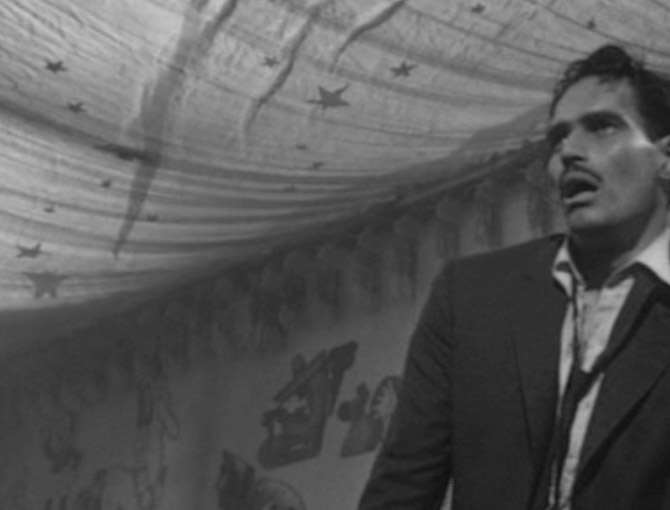
What's most curious about this box is just how dark and brown Speedy becomes in this incarnation of his corporate-America-forged "Mexican" being. Something about hawking sub-edible frozen culinary delights moved the hand of his marketers to give Speedy something akin to the brown-face applied to Charlton Heston in Orson Welles's' Touch of Evil. Commonly, he does not appear this way--especially not in his heydays during the 1960s. Just more to worry about as we attempt to parse the evolution of stereotypes in the good ol' USA.
Drawn. ca via neatorama via youtube is broadcasting a very cool interview with Mel Blanc, the voice of Speedy Gonzales, the Frito Bandito, Bugs Bunny, Sylvester and hundreds of other memorable cartoon characters for Warner Brothers and other companies. I get asked a lot at readings if I hate Speedy Gonzales and Warner Brothers for all of the stereotypes they popularized in their short, animated classics and I always say 'please read the book.' My "Autopsy of a Rat" is a cloaked love letter to Friz Freleng, Robert McKimson, Tex Avery, Chuck Jones, and the thousands of artists and technicians that changed the face of animated entertainment for the ages. One of Blanc's Mexican character-voices appears towards the end of the video, part of a bit he developed with Jack Benny for his variety show--his "Mexican" is no dope either as this schtick is complex. The gnarly threads binding the fates of Jewish American animators and Mexican-American subjectivity are the true object under analysis in "Autopsy of a Ray" and in Text[t]-Mex. The least interesting question to put here is whether Freleng, Blanc, et al were racists--does Pepe Le Peu besmirch the psyche of your average Frenchman? The more interesting question and the ongoing challenge for those of us who travail in cultural studies is how race and ethnicity (and gender and sexuality) weave there way into every aspect of what passes for entertainment.
I remember writing the first draft of "When Electrolysis Proxies for the Existential" on a plane on my way out to Purdue for their then annual Romance Languages conference. I was reading a biography of Rita Hayworth at the time (guilty pleasures that double as scholarly research) and had run across amazing revelations regarding Hayworth (née Cansino) and her father (incest!) and Hayworth and her "barber" (electrolysis to lift her hairline), both dispatches couriered to my eyes courtesy of Barbara Leaming--Timereviewed the book back in 1989.
Latina bombshell? Spanish femme fatale? The mysteries of Margarita metamorphosis take up the better part of 40 pages in Tex[t]-Mex in a chapter entitled "When Electrolysis Proxies for the Existential: A Somewhat Sordid Meditation on What Might Occur if Frantz Fanon, Rosario Castellanos, Jacques Derrida, Gayatri Spivak, and Sandra Cisneros Asked Rita Hayworth Her Name at the Tex[t]-Mex Beauty Parlor."
Here's a snippet of Cansino/Hayworth in living color from Blood and Sand (dir. R. Mamoulian; 1941). Count the number of fused "Spanish"/"Latina" tropes in the clip--here's a hint: can you say "bullfighting"?
Lovely Rita! What a curious clip--shades of Almodovar's Matador.
Let me state here in public and for the record that the only reason Tex[t]-Mex EVER appeared in print, aside from nagging, utterly welcome, periodic chingasos from Davíd Carrasco, was the support and encouragement of Arturo J. Aldama, killer of many trees for all the books he has published in the fields of ethnic studies and cultural studies, and editor, in particular, of Violence and the Body, where the existentialism/electrolysis piece finally got published the way I had imagined it in the first place--snapshot to your right. While the Rita chapter in Tex[t]-Mex is extensively revised and features many new Hayworth pictures, it has to be said that without the Arturo Aldama, my UT Press opus would never have seen the light of day.Gracias con un abrazo fuerte a Profe Aldama!
Horror of horrors and some peace! Peace knowing that voting rights for minorities are a thing of the past, what with our mortality rate. Ace internet streetdick Josie Nericcio writes in:
To: Bill Nericcio From: Josie Nericcio Subject: The BRAD BLOG : VIDEO EXCLUSIVE: DoJ Voting Rights Chief Says 'It's a Shame' Elderly May be Disenfranchised by Photo ID Laws, But Minority Voters 'Don't Become Elderly, They Die First' Date: Wed, 10 Oct 2007 16:01:20 -0700
The introduction to my UT Press book Tex[t]-Mex includes a throwaway paragraph wherein I gesture at some future study that would highlight Caucasian entries in the bestiary of bizarre Ethnic American figuration. After all, it is not just sleeping "Mexicans," bone-through-the-nose "Africans," and murderous "Italians," (to name a few) that suffer when subjected to the logic of stereotypes, white folks suffer as well as they pass through our diverse and complex American matrices of representation.
In the book, I included this image--part of a discarded box I found around back of a cool toy store in La Jolla, CA.
Let me add to this startling artifact (the boy, in particular, is hauntingly curious), the following entry from a recent Target® Sunday circular:
Damned peculiar and certainly worthy of semiotic scrutiny--any commentators with a take out there?
In lieu of a prose gloss, allow me to profer instead this brief semiotic parable instead:
Every other year or so this son of Laredo, ¡Tejano y que!, goes to merry old England to study with SDSU and FIE. One of their ace professors, John Makey, is a good friend and matey and, shares this Chicano's affection for forgotten cultural artifacts. How else to understand the gift he made to me, on a student field trip no less, of the following find in London's Spitalfields Market:
Like manna from the skies, Makey gifted me with these "Mexico" and "Las Vegas" brand stockings by a British firm from the 1960s. Perhaps it was a suspicion about my ilk's fascination with cross-dressing, or maybe some shared confession on his part, all I know is that if Tex[t]-Mex goes to a second edition (hint, hint UT Press!), the third and new seductive hallucination gallery will proudly feature these ladies' accessory.
It brings me pleasure to bring to your waiting eyes in all their high-resolution glory, two of the main features from the Seductive Hallucination Galleries 1 and 2 in Tex[t]-Mex. In the book, though gloriously laid out by Lisa Tremaine, the images appear in miniature when what they really deserve is the full light of day--let there be light! Click the image.
The dynamic duo of Jose & Maria are something I have been calling ethnic mannequins. They are "Mexican" in the broadest sense of the term--they provide service as shoeshine "boy" and maid, occupations thought of as a birthright for "Mexicans"; and they do so with a smile, without attitude, and with pleasure as they shine the shoes and fluff the pillows to bring a smile to your face within the corridors of the Four Seasons Hotel in San Francisco (where Jose once hung his hat) and Houston. These pages are scanned from original ads that ran regularly in the New Yorker from 1988 to 1991--if you know any of the production people in advertising firms that came up with this campaign, please have them contact me at bnericci@mail.sdsu.edu as I am dying to interview them.
What really moves me about these exhibition artifacts is reverberates at the edge of the gleam of their eyes. Is it pride? feigned pride? acting? I fear I will never know. But the pleasure in the act of cleaning, an almost fetishistic jouissance from a simultaneous enactment of hygiene and subsevience--we, the readers of the ad, sadistically profit from the pleasure of their subservience like some S&M gala gone mad.
Our Chicano mouthpiece with/for/against/in/as Mexican and Latina/o stereotypes does a nice job taking CNN's reporter on a Santa Ana, CA odyssey which includes (watch closely!): a culinary adventure with mango and chile; Arellano shamelessly flirting with fetching Kara Finnstrom (you manly Lothario, you!); a gawking, trucker-hatted Mexicano eavesdropping on the interview (a Derridean moment if there ever was one); and, lastly, Finnstrom, in an attempt to render Arellano more even-handed than he is (who the f*** wants to be even-handed), using clever editing to make it seem even Arellano thinks all Mexicans (cut to grainy archive shot of Ellis Island exiles) are god-damned lazy for not kowtowing to the beloved mother tongue, the tasty Kool-Aid/Mother's Milk of the royal language of the land, English! No snide comments please, that your Mexican galleryblogger is a Chair of an English Department himself please. I get it! I know!
nota bene: Meet the Mexican!
Globetrotting Arellano will be reading/signing his hot tamale tome, Ask-a-Mexican, his new, best-selling Scribner's book, at 2pm in the Love Library, SDSU, November 28, 2007 as part of literature.sdsu.edu's Fall 2007 Living Writers series that include Bill Luvaas and Carolyn Forche.
Here's a taste of his sass-filled prose:
Carlos Mencia and Graffiti Does the bean dare call the beaner brown? By Gustavo Arellano Published: October 4, 2007
Subject(s): Carlos Mencia, Mexicans and graffiti
Dear Mexican,
I'm a minority, and I know we can be overly sensitive sometimes, but I just can't stand Carlos Mencia. Not only are his jokes asinine, but I feel they are actually racist. Whereas Dave Chappelle tried to make fun of society's racist thoughts, Mencia seems to promote them. I know black folk liked Chappelle, but how do Mexicans feel about Mencia? I mean, he has almost single- handedly brought back the word "beaner." What an asshole.
Tehrangelino Tim
Dear Persian Gabacho,
Does the bean dare call the beaner brown? I suppose I could, especially after Mencia appeared on the September 16 edition of Good Morning America and trashed the Mexican by stating, "When you say, 'I'm a Mexican, ask me a question and I'm going to answer for all Mexicans,' that scares me. That legitimizes whatever answer that person gives, whether it's good or bad." Interesting critique, except I've never made such a claim, at least not while sober. And Mencia's one to scold, especially in light of accusations by other comedians (including Chicano icon George Lopez) of plagiarizing their jokes — way to perpetuate stereotypes, Carlos! But I digress: only highfalutin Mexicans get offended by Menstealia's abrasive, occasionally funny routine. You can slam the half-Mexican, half-Honduran for his politically incorrect approach, but then you're walking into his trap — and that's what makes Menstealia a wabby genius. A comedian's raison d'être is to agitate and entertain — nothing more, nothing less. Menstealia succeeds brilliantly — ratings for Comedy Central's Mind of Mencia remain high, and I've already called him Menstealia four times and will do it once more. Carlos has the potential to become a political jester à la Chappelle or Pryor — in an interview I did with him for Latina magazine, Menstealia said our illegal immigration problem "will take care of itself...we had the same thing with the micks and wops and guineas" — but he's currently happy playing the screaming fool, not Cesar Chavez. Let the pendejo mug, I say — if you don't like him and want gentle, polite Latino laughs, tune into Ugly Betty.
![The Tex[t]-Mex Galleryblog](https://blogger.googleusercontent.com/img/b/R29vZ2xl/AVvXsEh_KqWRy3aDsokE_MKZPvSky0JCY5DtTUqNZ1YcuqLN4LzX6kUbISADnHe9CR8IEBlhVVcnUnXMjc1EY54oLPx-aOoWF_VdXOokJ2Y2smvV1WCxEu2TZguczGSloiFnkz4iQ_SkIi56dw/s1600/111Screen+shot+2014-04-01+at+10.jpg)
 I just got a cyberpostcard from Lázaro Lima of New York, author of The Latino Body, pointing me to some fine anti-iconoclastic doings down in San Antonio where I am lecturing at UTSA on November 5, 2007. No doubt some church site/sightseeing is in this Mexican's future!




![I am going to be reading from Tex[t]-Mex at the Cactus Cafe](http://literature.sdsu.edu/textmex/1cactus_gig.jpg)
